
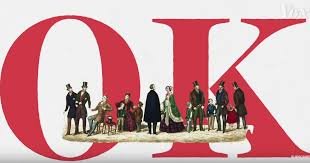
The word “OK” has become a universal expression, but its origins are more peculiar than you might think. It first appeared in 1839 as part of a playful linguistic trend in the U.S. where abbreviations with intentional misspellings were popular. “OK” was a humorous abbreviation for “oll korrect,” a misspelling of “all correct.”
1. Political Influence: OK gained widespread recognition during the 1840 presidential campaign of Martin Van Buren, whose nickname was “Old Kinderhook” (OK), referencing his hometown in Kinderhook, New York. His supporters used “OK” as a campaign slogan, further popularizing the term.
2. Global Reach: OK’s simple and versatile nature allowed it to spread internationally. It became a quick and efficient way to communicate agreement, confirmation, or acceptance. By the early 20th century, “OK” had become a part of everyday language around the world.
3. Usage: Today, “OK” is used in countless contexts, from informal conversations to formal agreements. Its adaptability has made it one of the most recognized words across languages and cultures.
In conclusion, “OK” began as a humorous American abbreviation, but its global and enduring popularity can be traced to its versatility and simplicity. From its political roots to its everyday use, it remains a key part of how we communicate.